“Planeterranea”: An attempt to broaden the beneficial effects of the Mediterranean diet worldwide
Translating Longevity: How "Planeterranea" is Bringing the Mediterranean Diet to Your Backyard
We have known for decades that the traditional Mediterranean diet is one of the healthiest eating patterns in the world. Rich in fresh vegetables, whole grains, pulses, and heart-healthy fats like extra-virgin olive oil, it has a proven track record of reducing the risk of cardiovascular disease, Type 2 diabetes, and various cancers.
But what if you don't live anywhere near the Mediterranean basin? What if transporting artisan Italian breads, Greek olives, and specialty produce to your local grocery store is too expensive, bad for the environment, or clashes with your native culinary traditions?
This exact challenge is why the UNESCO Chair on Health Education and Sustainable Development launched a global research project called "Planeterranea." The goal isn't to force Mediterranean ingredients onto other cultures, but to find local, native foods around the world that mimic the exact nutritional footprint and health benefits of the original Mediterranean diet.
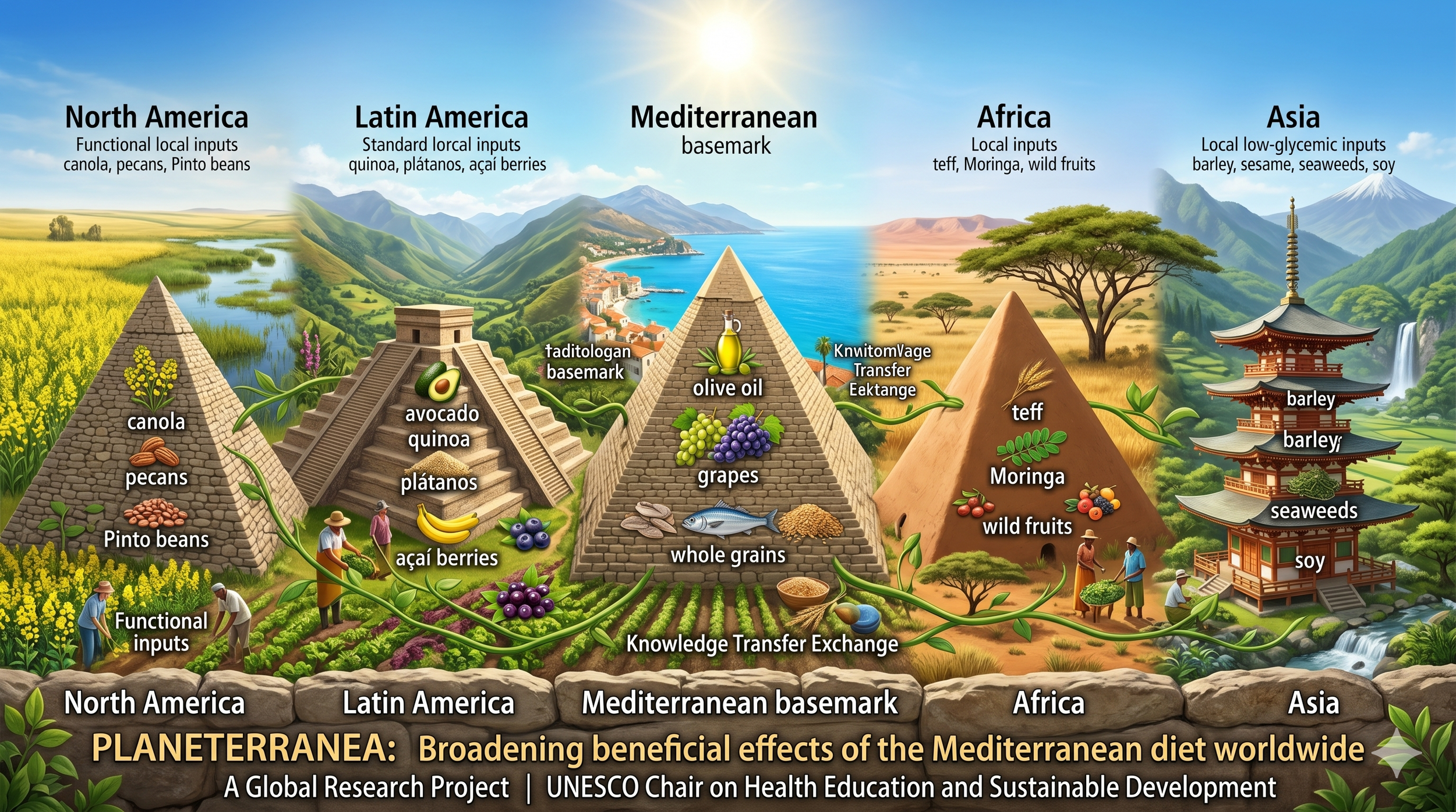
By interviewing global communities and reviewing two decades of nutritional data, researchers successfully mapped out brand-new, culturally localized "nutritional pyramids" across five major macro-areas. Here is how the science of longevity is being translated for a truly global audience.
🌎 The 5 Global Pyramids: Local Foods, Identical Benefits
1. North America: Upgrading the Western Diet
The typical North American diet is notoriously high in refined grains, saturated fats, and added sugars. To introduce a sustainable, highly modifiable risk factor framework without losing local food identity, the Planeterranea pyramid introduces a few key functional swaps:
Canola Oil: Developed in Canada, this oil is rich in monounsaturated fatty acids (MUFAs) and alpha-linolenic acid, offering a powerful cholesterol-lowering alternative to saturated fats.
Pecans: As a traditional North American tree nut, pecans are packed with MUFAs and antioxidants, proven to help optimize blood lipid profiles and support healthy insulin sensitivity.
Pinto Beans & Okra: Standard ingredients in iconic regional dishes like Louisiana gumbo, these local crops provide a massive dose of soluble and insoluble fiber to support metabolic optimization and heart health.
2. Latin America: Protecting the Plant-Forward Base
Traditional Latin American eating habits are naturally plant-forward, but modern urbanization has introduced an influx of hyper-processed foods. The localized pyramid seeks to restore balance by highlighting regional superfoods:
Avocado: Serving as a cost-effective and culturally beloved alternative to olive oil, avocados deliver the exact healthy MUFAs and Vitamin E needed to shield against cardiovascular risks.
Quinoa & Plátanos (Green Bananas): These traditional starches are exceptional low-glycemic options. Plátanos are packed with resistant starch, which improves gut microbiota composition and prevents sharp postprandial glucose spikes.
Açaí Berries: Native to the Amazon, these dark berries provide an abundance of health-defending anthocyanins and polyphenols, which combat oxidative stress and systemic inflammation.
3. Africa: Rediscovering Resilient Ancient Crops
Many African nations are currently undergoing a rapid "nutrition transition," moving away from natural farming toward highly processed Western imports. The African longevity pyramid leans into climate-resilient, nutrient-dense native crops:
Teff: This tiny, ancient grain native to East Africa is a nutritional powerhouse, offering superior dietary fiber, protein, calcium, and iron levels compared to standard refined grains.
Moringa: Capable of thriving in dry, less fertile soils, the leaves and seeds of the Moringa plant serve as a local source of healthy oleic fats and provide more antioxidant polyphenols than many common fruits.
Native Fruits (Marula, Mobola Plum): These local wild fruits possess strong carbohydrate-hydrolyzing enzyme inhibitors, meaning they naturally slow down sugar digestion and support long-term metabolic health.
4. Asia: Balancing the High-Glycemic Load
While traditional Asian diets feature an abundance of vegetables, they are often heavily reliant on high-glycemic-load carbohydrates like white rice, which can accelerate metabolic syndrome risks. The Asian adapted pyramid shifts the focus toward ancient, protective staples:
Barley: Widely cultivated across Central, South, and Western Asia, whole-grain barley contains $\beta$-glucan, a viscous soluble fiber that traps cholesterol and reduces fat absorption in the gut.
Sesame Oil & Seeds: Widely used across the continent, sesame is incredibly rich in specialized lignans (like sesamin) and $\gamma$-tocopherol, which clinical trials show can significantly lower blood pressure and improve fasting blood glucose levels.
Seaweeds & Soy: From Spirulina and Wakame to traditional tofu, these ingredients provide highly bioavailable plant proteins, essential omega-3 fatty acids ($EPA$ and $DHA$), and cell-protecting isoflavones.
5. Australia: Merging Farmed and Wild Nutrition
Modern Australian eating habits have drifted significantly toward energy-dense, meat-heavy Western patterns. The Australian longevity pyramid targets structural balance by reintroducing indigenous and locally farmed favorites:
Macadamia Nuts & Oil: Native to Australia, macadamias contain higher levels of monounsaturated fats than almost any other food source on earth, clinically proven to reduce markers of oxidative stress and systemic inflammation.
Barramundi & Atlantic Salmon: Locally farmed fish species that provide massive, clean doses of omega-3 polyunsaturated fatty acids to lower triglycerides and protect the cardiovascular system.
Indigenous Wild Fruits: Native species like Davidson’s plum, finger lime, and pepper berry provide concentrated hits of essential vitamins and minerals, carrying potent anti-inflammatory properties.
🚀 The Takeaway: Longevity is a Global Language
The core message of the "Planeterranea" project is revolutionary because it moves away from a rigid, one-size-fits-all approach to nutrition. It proves that you do not need to abandon your cultural heritage, your local ecosystem, or your family traditions to unlock the clinical secrets of a long, vibrant life.
True dietary success isn't about shipping specific foods across the globe—it's about understanding the universal science of nutrition and finding it growing right in your own backyard. By looking to the traditional crops of our ancestors, we can build a sustainable, eco-friendly lifestyle that nurtures both our bodies and the planet.